

Teen Self Harm Counseling That Helps
When a parent notices cuts, burns, scratches, or other signs of self-injury, the room can go quiet fast. Fear takes over. Questions rush in. Many families searching for teen self harm counseling are not looking for a theory lesson – they need to know what is happening, what to do next, and whether healing is truly possible.
The answer is yes. With the right support, teens can learn safer ways to cope, families can rebuild trust, and painful patterns can begin to change. Self-harm is serious, but it does not have to define a young person’s future.
What teen self harm counseling is really for
Teen self harm counseling is not about punishment, shame, or forcing a teenager to “just stop.” It is a structured, compassionate process that helps uncover what the behavior is doing for the teen emotionally. For some adolescents, self-harm may bring a temporary sense of relief, release intense internal pressure, express emotional pain they cannot put into words, or create a feeling of control when life feels chaotic.
That is why counseling focuses on more than the behavior itself. A skilled therapist looks at the emotional drivers underneath it. Anxiety, depression, trauma, bullying, family conflict, perfectionism, grief, identity struggles, and overwhelming stress can all play a role. In some cases, self-harm appears alongside ADHD, OCD, eating disorders, or substance use. Every teen is different, which means treatment should be individualized rather than one-size-fits-all.
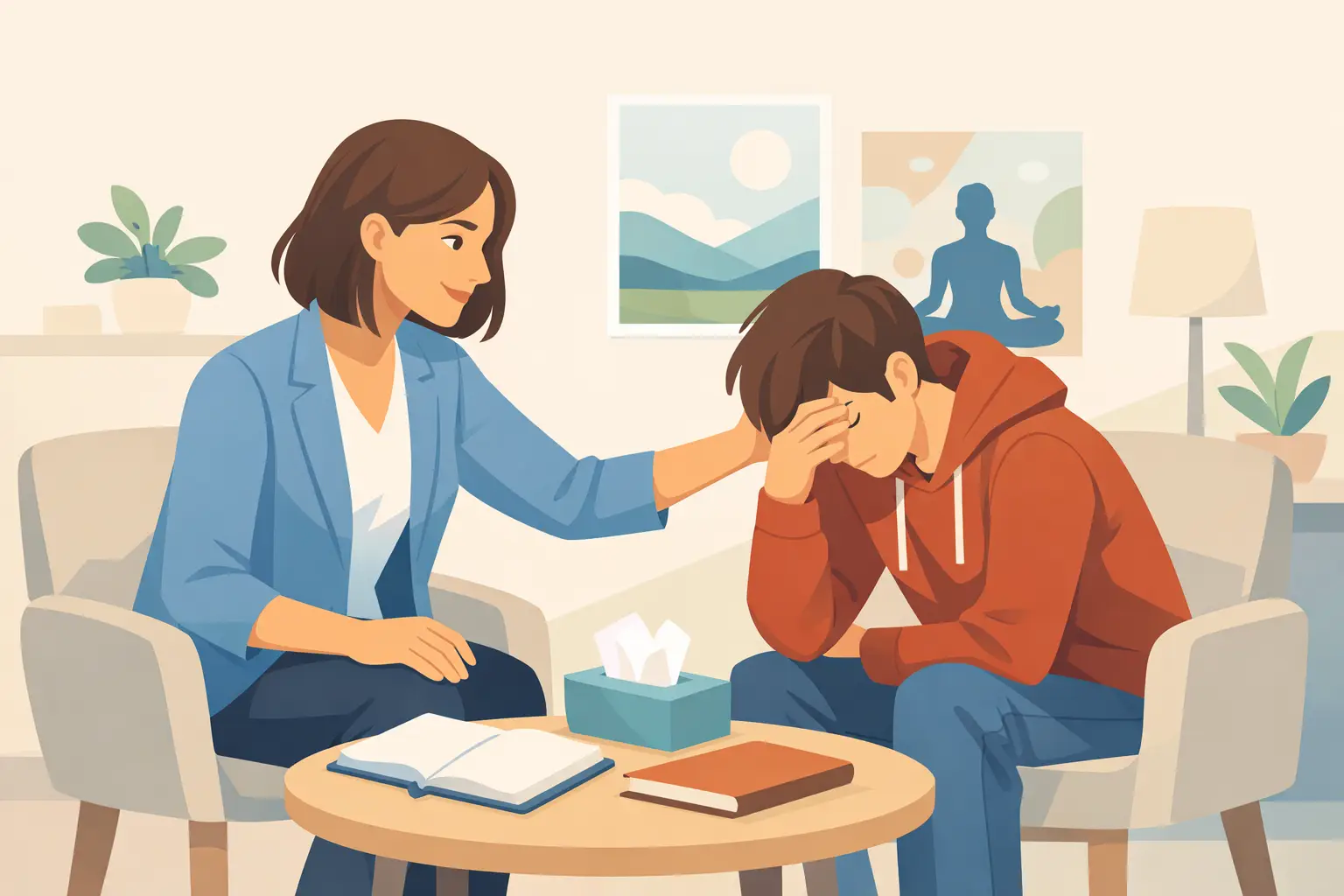
Parents often worry that bringing up self-harm will make it worse. In reality, a calm and caring conversation can open the door to help. Counseling gives teens a safe place to speak honestly while also giving parents guidance on how to respond in ways that support healing instead of escalating fear.
Why teens self-harm
Self-harm is often misunderstood. It is not always a suicide attempt, although it should always be taken seriously. Some teens describe feeling emotionally numb and using pain to feel something. Others feel flooded by emotion and use self-injury to reduce the intensity for a moment. Some are carrying secret shame, social pressure, or trauma they have not shared with anyone.
This is where nuance matters. A teen may say, “I do not want to die,” and still be at significant risk emotionally. Another teen may self-harm occasionally but be hiding severe depression. The pattern, frequency, method, level of secrecy, and presence of suicidal thoughts all matter. Counseling helps sort through those details carefully rather than making assumptions.
For Christian families, this can carry another layer of pain. Parents may feel confusion about how faith and suffering fit together, or they may worry their teen feels spiritually disconnected. A faith-sensitive counselor can hold clinical wisdom and spiritual care together with gentleness, never using guilt as a treatment tool.
What happens in teen self harm counseling
In the first phase of counseling, safety comes first. That includes understanding the teen’s current risk, whether there are suicidal thoughts present, how often self-harm occurs, and what situations tend to trigger it. The therapist may work with the teen and family to create a safety plan, reduce access to tools used for self-injury, and identify immediate steps for moments of crisis.
From there, therapy begins helping the teen recognize patterns. Many adolescents do not fully see the cycle at first. A therapist can help them connect the dots between certain thoughts, body sensations, emotions, conflicts, and the urge to self-harm. Once those patterns are clearer, treatment can focus on replacing self-injury with healthier coping tools that actually fit the teen’s life.
That might include learning emotional regulation skills, practicing distress tolerance, building communication skills, addressing negative self-talk, and developing ways to ask for support before things reach a breaking point. In some cases, trauma-informed work is needed. In others, family counseling is an important part of healing, especially when communication has broken down or everyone in the home feels tense and uncertain.
Good counseling also respects the pace of the teenager. Pushing too hard too fast can cause shutdown. Going too slowly can leave risk unaddressed. Strong adolescent therapy holds both truth and patience.
When parents should seek teen self harm counseling
If you know your teen is self-harming, it is time to seek help. If you strongly suspect it, it is still worth reaching out. Warning signs can include unexplained cuts or marks, long sleeves in hot weather, bloodstains on clothing, withdrawn behavior, increased irritability, sharp mood swings, hopeless statements, hidden sharp objects, or a sudden need for privacy around their body.
Sometimes the signs are less visible. A teen may seem high-achieving on the outside while feeling deeply overwhelmed inside. Others become more isolated, sleep poorly, stop enjoying activities they once loved, or react intensely to small disappointments. Parents do not need perfect proof before contacting a counselor.
There is also a difference between needing outpatient counseling and needing a higher level of care. If a teen has active suicidal intent, a specific suicide plan, severe self-injury requiring urgent medical attention, or cannot stay safe, emergency evaluation is needed right away. Outpatient therapy is very helpful, but it is not the right setting for every crisis moment.
How parents can help at home
One of the hardest parts for parents is managing their own reaction. Panic, anger, or shame are understandable, but they can make a teen retreat further. A steadier response sounds more like, “I am really glad you are not handling this alone anymore,” and less like, “How could you do this?”
That does not mean minimizing the behavior. It means responding with seriousness and care at the same time. Teens need to know their pain matters and that adults can handle the truth without falling apart. They also need healthy boundaries. Monitoring safety, removing or securing items when necessary, and staying involved in treatment are acts of protection, not punishment.
Parents can help by creating more consistent emotional check-ins, reducing unnecessary criticism, and watching for patterns around stress, school pressure, peer conflict, and social media exposure. It also helps to praise honesty and effort, not just outcomes. When a teen says, “I had the urge and told you instead,” that is meaningful progress.
What to look for in a counselor
Not every therapist works with adolescent self-harm in the same way. Families should look for a counselor who is experienced with teens, trained to assess risk, comfortable involving parents appropriately, and grounded in evidence-based care. The best fit is often someone who can build rapport without becoming casual about safety.
It also helps when the counseling environment feels welcoming rather than clinical in a cold way. Teens are more likely to engage when they feel respected, not interrogated. Parents are more likely to stay hopeful when communication is clear and the treatment process makes sense.
For some families, faith matters deeply in the counseling relationship. A Christian-oriented practice can offer support that honors both mental health treatment and spiritual values. At Beyond Today Counseling, that kind of care is paired with evidence-based therapy and a commitment to meeting teens and families with compassion, skill, and hope.
Healing takes time, but it does happen
Progress in counseling is not always a straight line. A teen may open up quickly, or it may take weeks before trust starts to build. Some families see fewer incidents early on but then realize the deeper work is just beginning. That does not mean therapy is failing. It often means the real healing work is finally happening.
What matters most is that self-harm is not treated as a secret to hide or a behavior to simply control. It is a signal that a teen needs support, structure, and a safe place to heal. With thoughtful counseling, caring parental involvement, and the right clinical guidance, many adolescents move from surviving overwhelming emotions to handling them in healthier ways.
If your family is carrying this concern right now, you do not need to wait until things get worse to ask for help. Reaching out can be the first quiet step toward safety, trust, and a future that feels possible again.
Related Posts

What Faith Based Therapy for Anxiety Can Offer
Learn how faith based therapy for anxiety combines evidence-based care, practical...

Dopamine Addiction: Why We Chase It, What It Costs, and How to Reset
Dopamine has become a buzzword in mental health conversations, often hailed...

Teen Self Harm Counseling That Helps
Teen self harm counseling offers compassionate, evidence-based support to help...

ADHD Counseling for Teens That Truly Helps
ADHD counseling for teens helps with focus, emotions, school, and family stress...