

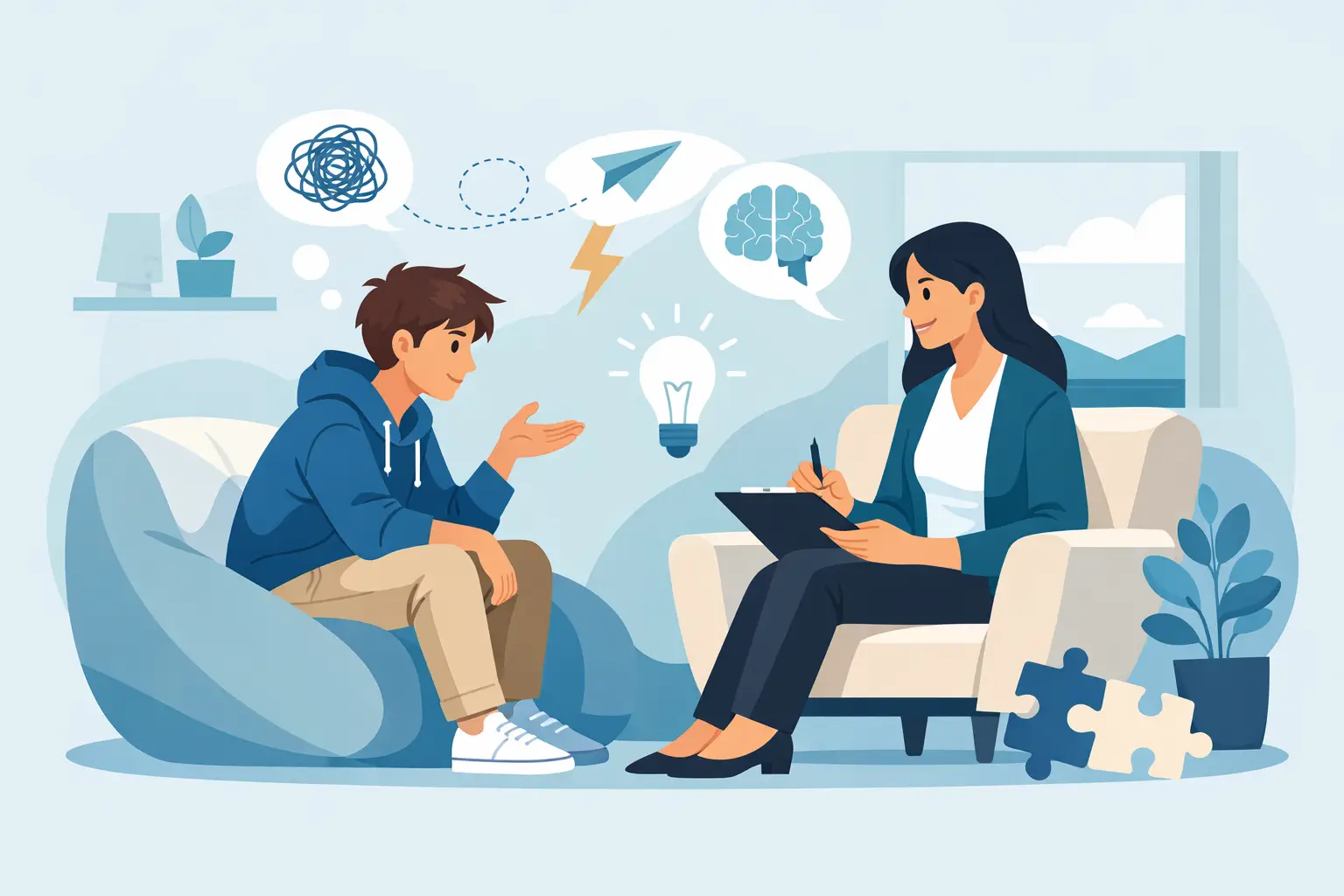
ADHD Counseling for Teens That Truly Helps
Some teens with ADHD are not the ones bouncing off the walls. They are the ones staring at homework for an hour, missing directions they just heard, shutting down after criticism, or melting down from the pressure of trying to keep up. For families living in that daily strain, adhd counseling for teens can offer more than behavior tips. It can provide steady support, practical skills, and a place where a teenager feels understood instead of judged.
ADHD in adolescence often gets more complicated, not less. School demands increase. Social dynamics become harder to read. Parents may see a teen who seems unmotivated, oppositional, or careless, while the teen feels frustrated, embarrassed, or defeated. Counseling helps make sense of what is really happening under the surface.
Why ADHD often feels different in the teen years
During childhood, ADHD may show up in obvious ways like impulsive behavior, high activity, or trouble following routines. In the teen years, the struggles can shift. A student may forget assignments, lose track of deadlines, speak harshly in the heat of the moment, or feel overwhelmed by tasks that seem easy for everyone else.
This is one reason families sometimes wait longer than they should to seek help. They may assume the teen just needs to try harder or be more responsible. But ADHD is not a character flaw, and it is not fixed by more pressure. It affects executive functioning, which includes planning, organization, emotional regulation, time management, and follow-through.
That does not mean every teen with ADHD needs the same kind of support. Some mainly struggle at school. Others deal more with low self-esteem, family conflict, anxiety, or anger. Effective counseling starts by understanding the full picture, not just the diagnosis.
What adhd counseling for teens can address
Good counseling is not about lecturing a teen into better habits. It is about helping them build skills, understand their brain, and find healthier ways to respond when life feels too loud or too fast.
Emotional regulation and frustration
Many teens with ADHD react quickly and intensely. They may get irritated fast, feel flooded by disappointment, or say things they regret before they have time to think. Counseling can help teens notice what happens in their body and mind before emotions take over. Over time, they can learn how to pause, regulate, and recover with less shame.
School stress and follow-through
A teen may be bright and capable but still miss assignments, underestimate time, or avoid work that feels overwhelming. Counseling can help break big tasks into manageable steps, identify patterns of procrastination, and build systems that actually fit the teen rather than forcing unrealistic expectations.
Self-esteem
Many adolescents with ADHD carry the message that they are lazy, difficult, careless, or always behind. After years of correction, those beliefs can run deep. Therapy helps challenge those patterns and replace them with a more accurate, hopeful understanding of strengths and struggles.
Family conflict
ADHD can wear down even loving families. Parents may feel exhausted from repeating themselves. Teens may feel controlled or misunderstood. Counseling can improve communication, reduce constant power struggles, and help everyone respond with more clarity and less reactivity.
What happens in ADHD counseling for teens
Parents often want to know what counseling will actually look like. The answer depends on the teen, because no two adolescents experience ADHD in exactly the same way. Still, effective therapy usually includes a mix of insight, skill-building, and practical problem-solving.
A counselor may help a teen identify common triggers, understand how ADHD affects daily life, and practice tools for organization, emotional regulation, and communication. Sessions may also address anxiety, depression, family stress, social struggles, or other concerns that are overlapping with ADHD. That matters, because ADHD rarely exists in isolation.
In some cases, parent involvement is an important part of the process. A teen needs privacy and trust in therapy, but parents also need guidance. The goal is not to turn counseling into another place where the teen gets corrected. The goal is to create support that works at home as well as in session.
The role of parents in the counseling process
Parents are often carrying a heavy load. You may be trying to support your teen while also managing school emails, missed deadlines, emotional blowups, and concern about the future. It is common to feel torn between compassion and frustration.
Counseling can help parents shift from constant reaction to more intentional support. That may include learning how to set structure without escalating conflict, how to give directions that are easier to follow, and how to respond to emotional outbursts in a way that builds connection instead of deeper resistance.
There are trade-offs here. A highly structured home can help some teens stay on track, but too much control can create more shutdown or rebellion. On the other hand, giving a teen complete independence before they are ready can lead to repeated failure. A thoughtful counselor helps families find the middle ground.
When ADHD is not the whole story
Sometimes a teen comes in for ADHD support, but the deeper issue includes anxiety, depression, trauma, grief, or chronic stress. Sometimes ADHD has gone undiagnosed for years, and the emotional fallout is significant. Sometimes the teen is coping through avoidance, irritability, or risky choices.
That is why a careful, individualized approach matters. A counselor should not assume every concentration problem is only ADHD, and they should not treat every behavior as defiance. Teens need space to talk honestly about what school feels like, what friendships are like, and whether they feel hopeless, angry, numb, or overwhelmed.
For some families, faith is also part of the healing process. Christian counseling can offer support that aligns with a family’s values while still using evidence-based therapeutic care. When that approach is welcomed by the teen and family, it can strengthen hope, identity, and resilience in a meaningful way.
Signs a teen may benefit from counseling now
A teenager does not need to be in crisis to need help. Counseling may be a wise next step if ADHD is beginning to affect daily functioning, relationships, or emotional health in a lasting way.
You may notice falling grades, frequent conflict at home, school avoidance, emotional outbursts, growing discouragement, poor self-worth, or a pattern of saying, “I just can’t do it” even when your teen wants to succeed. You may also see your teen masking all day at school and then unraveling at home where they feel safest.
Early support can prevent those struggles from hardening into deeper patterns. It can also give a teen language for what they are experiencing before shame becomes the loudest voice in the room.
Finding the right fit for adhd counseling for teens
The relationship between the teen and the counselor matters. A teenager is more likely to engage when they feel respected, not analyzed from a distance. They need someone who can be warm without being passive and direct without being harsh.
It also helps to look for counseling that understands adolescent development, not just ADHD symptoms. Teens are dealing with identity, peer pressure, independence, school demands, and rapid emotional change all at once. Therapy should reflect that reality.
Practical access matters too. Some families do better with in-person counseling because it creates routine and stronger face-to-face connection. Others benefit from telehealth because schedules are full and flexibility makes consistency easier. What matters most is finding care your family can realistically continue.
At Beyond Today Counseling, families looking for support in Cumming and the surrounding North Georgia area can find compassionate, evidence-based care for teens facing ADHD and related challenges. The right support can help a teenager feel less stuck and help parents feel less alone in the process.
A teen with ADHD does not need another message that they are failing. They need support that sees their strengths, understands their struggles, and helps them move forward one steady step at a time.
Related Posts

The Big Four Neurochemicals for Brain Health
The Four Big Neurochemicals for the Brain (And How to Keep Them in Balance...

Even Helpers Need Help: Compassion Fatigue
In every community, workplace, and family system, there are people who...

Women’s Mental Health: Finding Balance Through Sleep, Creativity & Connection
Let’s explore how three vital elements sleep, creativity, and connection—play...

ADHD Counseling for Teens That Truly Helps
ADHD counseling for teens helps with focus, emotions, school, and family stress...